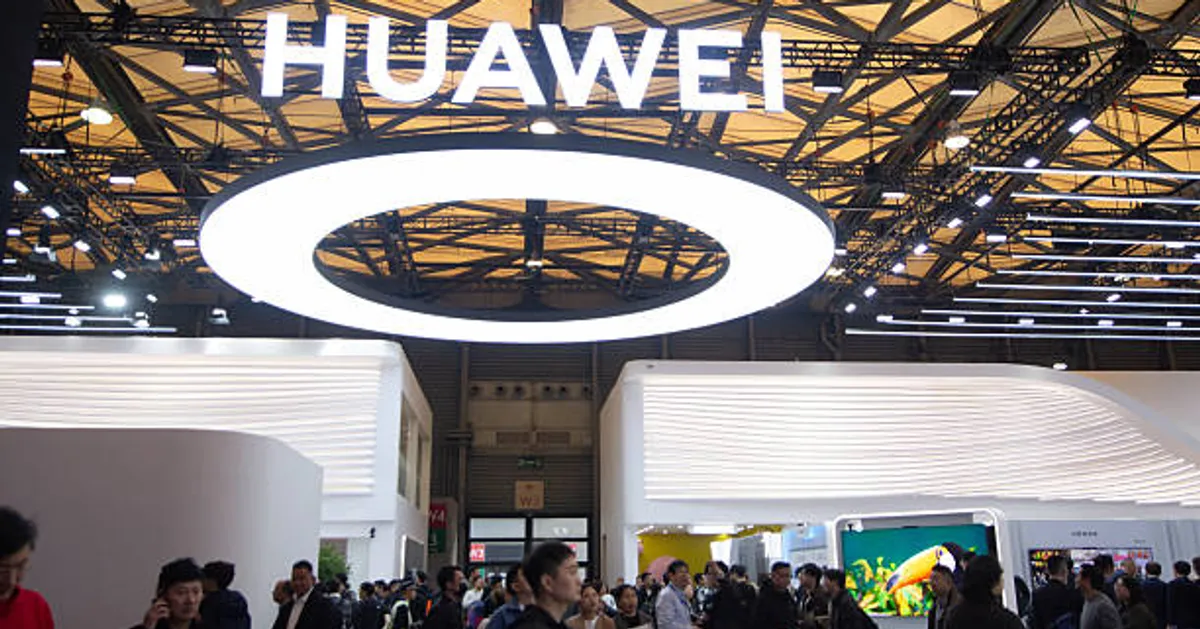
BEIJING, March 27 (GeokHub) — A new artificial intelligence chip developed by Huawei is gaining strong early support from some of China’s biggest technology firms, signaling a potential shift in the country’s semiconductor landscape amid ongoing global tech restrictions.
Industry sources say customer testing of Huawei’s latest processor has delivered promising results, prompting major companies such as ByteDance and Alibaba to plan significant orders. The move marks a notable breakthrough for Huawei as it seeks to compete more directly with U.S. chip leader Nvidia within China’s rapidly expanding AI market.
A Turning Point for Domestic AI Hardware
Huawei has faced challenges in persuading private-sector companies to adopt its earlier AI chips at scale. However, the company’s latest offering appears to address key limitations that previously slowed adoption.
The new chip is designed to integrate more seamlessly with widely used development systems, improving compatibility for engineers and reducing the complexity of switching from existing platforms. Enhanced response speeds and improved efficiency in processing AI tasks have also contributed to renewed interest among major tech players.
Sources indicate that Huawei is preparing for large-scale production, with shipments expected to ramp up later this year following initial testing phases.
Shifting Market Dynamics Amid Restrictions
The development comes at a critical moment for the Chinese AI sector. U.S. export controls have limited access to some of the most advanced foreign chips, creating an opportunity for domestic alternatives to gain ground.
While certain high-performance chips have received conditional approval for export, uncertainty around availability and supply has pushed Chinese firms to explore local solutions more aggressively.
Huawei’s latest chip is positioned to meet growing demand, particularly in “inference” computing—where trained AI models are deployed to perform real-world tasks such as answering queries, powering applications, and automating services.
Rising Demand for AI Deployment
China’s technology sector is increasingly shifting its focus from developing AI models to deploying them at scale. This transition has fueled demand for chips optimized for efficiency, speed, and real-world performance rather than just raw computing power.
The new processor is tailored to support this shift, offering improved performance in handling large volumes of AI-driven tasks across platforms and services.